

🇺🇸 Free Shipping within the USA — all-inclusive prices, no added tax at checkout.
The exact measurements of all our products are listed below and given on our website.
3 Tools That Replace a Closet Full of Specialty Products
Disclosure: KAIROHUBS USA sells the products featured in this post. We chose these three specifically because each one handles multiple cleaning jobs that people typically buy separate tools for — and because they address the tasks most people avoid or do poorly with whatever they already have on hand.
Last updated: 2026
Most households own too many cleaning products and not enough useful ones. The closet under the sink fills up with a grout brush used once, a window spray that leaves streaks, a duster that pushes dust around instead of capturing it, and a collection of sponges in various stages of decay. Everything is technically available, and nothing works particularly well.
The problem is not laziness or neglect. It is friction. When cleaning a window requires finding the spray, then the squeegee, then paper towels for the edges — and when the whole process takes twenty minutes and still leaves streaks — the window doesn't get cleaned. The cleaning tools that actually get used regularly are the ones that reduce the number of steps, the physical effort, or both. These three do exactly that.
In this guide:
- What makes a cleaning tool genuinely multi-purpose (and what's just marketing)
- Microfiber Ceiling Fan Duster with Extension Rod
- 3-in-1 Window Cleaner with Spray Bottle and Squeegee
- Cordless Electric Spin Scrubber with 5 Brush Heads
- How to build a minimal cleaning kit that covers every room
- FAQ
What Makes a Cleaning Tool Genuinely Multi-Purpose
A genuinely multi-purpose cleaning tool meets three criteria. First, it handles more than one surface type without needing modifications or attachments you'll lose. Second, it does each job at least as well as the dedicated tool it replaces. Third, it reduces the total effort or time required compared to doing the same task with conventional tools.
The three tools below each genuinely replace multiple dedicated products. The duster replaces a step stool and a rag for high surfaces. The window cleaner replaces a spray bottle, a microfiber cloth, and a squeegee — combined into a single motion. The electric scrubber replaces a grout brush, a tile brush, a bathtub scrubber, and your hands and knees.
1. Microfiber Ceiling Duster - Extension Rod
7.79$ (Free USA Shipping)
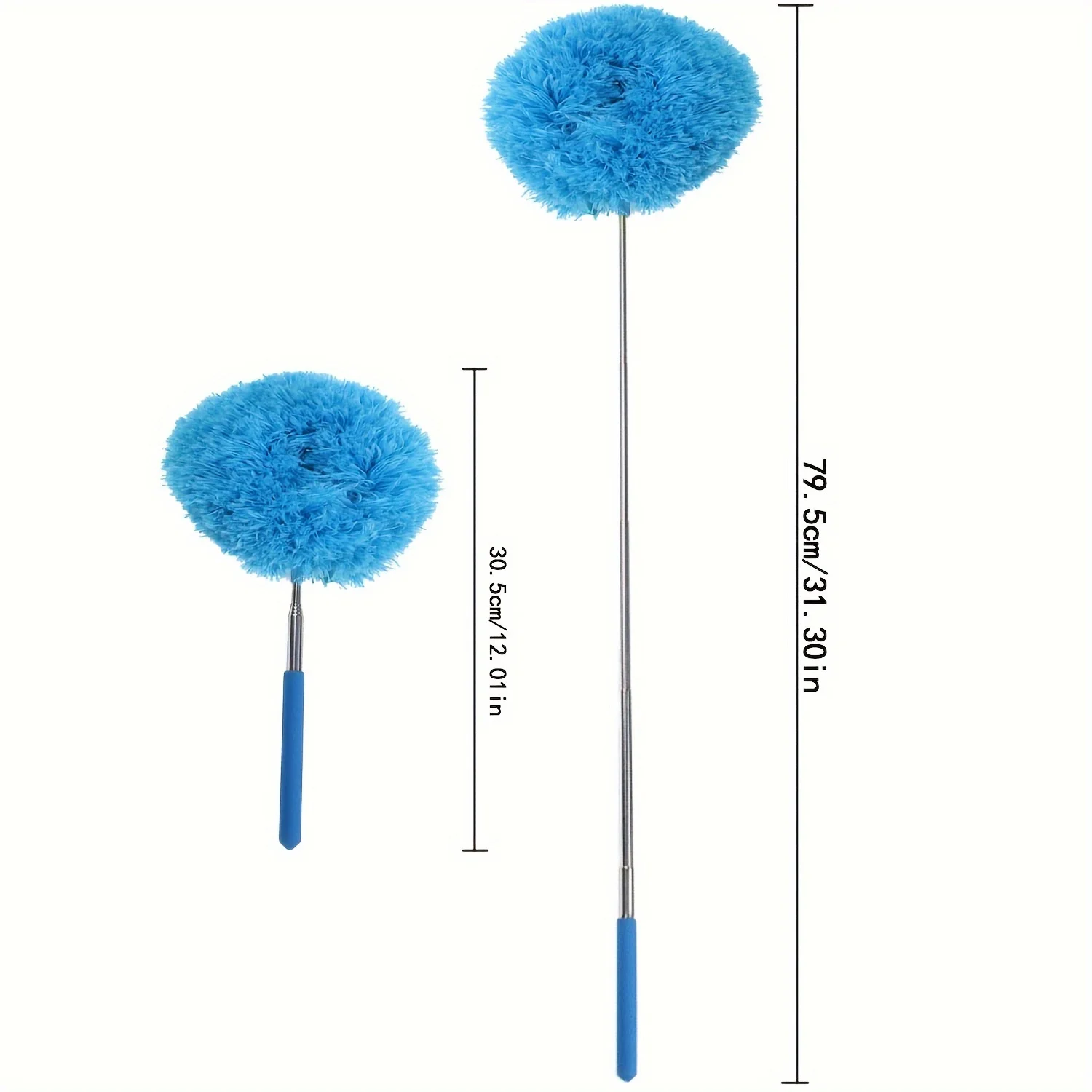
Dimension: extendable rod.Collapsed: 30.5 cm (12.01 in) — Extended: 79.5 cm (31.30 in) — telescopic microfiber round duster with extendable stainless steel handle. Removable washable microfiber head
What it replaces: step stool + damp rag, static dusters that redistribute dust, Swiffer-style disposable dusters
What it is: A microfiber dusting head on an extendable rod that reaches approximately 31 inches (79.5 cm) fully extended. The microfiber head is removable and machine washable.
The problem it actually solves
Ceiling fans, air vents, tops of bookshelves, crown molding, light fixtures — these surfaces collect dust continuously and get cleaned almost never. The reason is access. Reaching them requires a step stool or ladder, and most people are not going to drag a step stool to four different rooms for a task that feels optional until the dust becomes visible from the ground.
The extension rod eliminates the step stool entirely for most standard-height ceilings (8–9 feet). You stand on the floor, extend the rod, and wipe. Ceiling fan blades, which are one of the worst dust collectors in any home, can be cleaned in about thirty seconds per blade — a job that takes five to ten minutes with a step stool and rag because of the climbing, repositioning, and re-climbing for each blade.
Why microfiber matters for dusting specifically
Standard feather dusters and disposable static dusters share the same fundamental problem: they knock dust off surfaces and release a significant portion of it into the air, where it settles on everything else in the room within hours. You feel productive while dusting, but the net effect is moving dust from one surface to several others.
Microfiber traps dust rather than displacing it. The split fibers create an electrostatic charge that attracts and holds dust particles against the cloth rather than releasing them. The difference is visible — after wiping a ceiling fan blade with a microfiber duster, the cloth is visibly loaded with dust. After doing the same with a feather duster, the cloth looks the same but the floor beneath the fan is now dusty.
The washable head is what separates this from disposable dusters like Swiffer. Disposable dusters work reasonably well for one or two uses but require ongoing refill purchases. A washable microfiber head performs the same function indefinitely — toss it in the laundry, reattach it, and use it again. Over a year, the cost difference adds up meaningfully.
Where it works beyond ceiling fans
The extension rod makes this useful for any surface that's inconvenient to reach by hand: the tops of kitchen cabinets (a dust magnet that gets cleaned roughly once per year in most homes), HVAC vents near the ceiling, the tops of tall bookshelves, window frame ledges, crown molding, and the gap between the top of the refrigerator and the cabinet above it — a space that accumulates a genuinely impressive amount of greasy dust in kitchens and is nearly impossible to clean without standing on a chair.
For lower surfaces like shelves, electronics, and furniture, the microfiber head works without the extension rod as a handheld duster.
Limitations
The microfiber head captures loose dust effectively but will not remove sticky residue or grease-laden dust (the kind that builds up on kitchen surfaces near the stove). For greasy dust on the tops of kitchen cabinets, a damp microfiber cloth with a small amount of degreaser works better. The duster also won't reach surfaces in homes with ceilings above 10 feet without a step stool — the rod extends reach but does not replace a ladder for genuinely high surfaces.
The rod is lightweight, which is an advantage for overhead use but means it flexes slightly when you press firmly against a surface. For ceiling fan blades and vents, light pressure is all that's needed — but if you try to scrub anything with this tool, the flex makes it feel flimsy. It's designed for dusting, not scrubbing.


Shop the Microfiber Ceiling Duster with Extension Rod →
2. 3-in-1 Window Cleaner with Spray Bottle & Squeegee
7.12$ ( Free usa shipping)
Dimensions: 21.5 cm (W) x 25.7 cm (H) — (8.46 in W x 10.12 in H)3-in-1: spray bottle + microfiber pad + squeegee. Refillable spray bottle.
What it replaces: a spray bottle + paper towels + a separate squeegee (three tools and three steps consolidated into one tool and one motion)
What it is: A handheld cleaning tool that combines a built-in spray bottle, a microfiber cleaning pad, and a rubber squeegee blade in a single unit. You spray, scrub, and squeegee in one continuous motion without switching tools or putting anything down.
Why windows don't get cleaned
Windows are one of the most procrastinated cleaning tasks in any home, and the reason is almost entirely about the process. The conventional method — spray glass cleaner, wipe with paper towels, deal with streaks, re-spray, re-wipe, still see streaks in sunlight — is tedious enough that most people clean their windows two or three times per year at most.
Professional window cleaners don't use paper towels. They use a scrubber to apply solution, then a squeegee to remove it in a single pass. The result is streak-free glass in a fraction of the time. The 3-in-1 design brings that same two-step logic (apply solution, squeegee it off) into a single handheld tool — except it adds the spray bottle directly onto the tool so you don't need a separate bucket of soapy water.
How the three functions work together
You fill the built-in reservoir with your cleaning solution (water and a drop of dish soap works for most glass surfaces). Squeeze the trigger to spray directly onto the glass. Flip the tool to the microfiber pad side and scrub to loosen fingerprints, dust, and grime. Flip again to the squeegee side and pull downward in a single stroke to remove the solution. The glass dries streak-free because the squeegee removes the liquid completely rather than smearing it around the way paper towels and cloth do.
The key advantage over the conventional method is that you never put the tool down. Spray, scrub, squeegee — all with the same object in your hand. That sounds minor until you've cleaned six windows in a row and realize the whole job took fifteen minutes instead of forty-five.
Where it works beyond windows
Any smooth glass or glossy surface benefits from the squeegee approach: bathroom mirrors, glass shower doors (where soap scum builds up), sliding glass patio doors, glass tabletops, and stainless steel appliances (the squeegee prevents the smearing that cloths leave on brushed steel). The microfiber pad side alone works as a standard scrubber on countertops and other hard surfaces when you don't need the squeegee.
Glass shower doors in particular are worth calling out. Soap scum on shower glass is one of the hardest bathroom cleaning problems because it builds up gradually and is nearly invisible until it's thick enough to look permanently hazy. Running the squeegee across the glass after each shower — a ten-second habit — prevents the buildup entirely. The tool can live in the shower on a hook.
Limitations
The squeegee blade is sized for handheld use, which means it covers a narrower strip per pass than a full-size professional squeegee. On large picture windows or floor-to-ceiling glass, you'll make more passes than a professional tool would require. For standard home windows and bathroom mirrors, the size is adequate.
The spray reservoir is small enough to need refilling during a full-house window cleaning session. For two or three windows or mirrors, one fill is plenty. For a full apartment's worth of glass, expect to refill once or twice.
The microfiber pad is not removable for separate washing on this tool — you clean the entire head under running water. This works fine for routine maintenance but means the pad can't go through a dedicated microfiber laundry cycle separately from the tool.


Shop the 3-in-1 Window Cleaner with Spray Bottle & Squeegee →
3. Cordless Electric Spin Scrubber with 5 Replaceable Brush Heads
14.99 $ (Free USA Shipping)
Multiple types brush headsIncluded.
What it replaces: manual grout brush, bathtub scrubber, tile brush, sink scrubber, oven brush, and the physical effort of scrubbing all of them by hand
What it is: A cordless, rechargeable electric scrubber with a motorized spinning brush head and five interchangeable attachments designed for different surfaces — flat surfaces, corners, grout lines, curved surfaces like sinks and tubs, and heavy-duty scrubbing on ovens and stovetops. For organizing the bathroom products you're now cleaning around, see our bathroom organizers for small apartments guide.
The real value is not the tool — it's what you'll actually clean because of it
Electric spin scrubbers have been around for several years, and the marketing always focuses on power and speed. Those matter, but the actual reason these tools change household cleaning habits is simpler: they remove the physical barrier that prevents people from cleaning certain things at all.
Scrubbing bathtub grout by hand requires getting on your knees, applying pressure with a small brush, and working in repetitive motions that strain your wrist and back within minutes. Most people do this rarely — once a month at most, often less. The result is grout that gradually darkens, soap scum that builds up in tub corners, and hard water stains that become permanent fixtures.
A spin scrubber lets you stand upright (or lean slightly) while the motor does the scrubbing. The brush head rotates fast enough to break up soap scum, hard water deposits, and embedded grime without requiring you to apply significant manual pressure. The physical effort drops from "workout" to "guiding the tool across the surface." That reduction in effort is the reason people who own spin scrubbers clean their bathrooms more frequently — not because they enjoy cleaning more, but because the barrier to starting is low enough that it actually happens on a regular basis.
What the five brush heads are actually for
Not every brush head will be equally useful in every household. Here's a practical breakdown:
The flat brush is the most versatile. Use it on tile floors, flat countertops, stovetop surfaces, and any large flat area where you need coverage rather than precision. This is the head that stays on the tool most of the time.
The dome brush fits curved surfaces — bathtub basins, sink bowls, and rounded fixtures. The curved profile maintains contact with concave surfaces where a flat brush would only touch the edges and miss the center.
The pointed brush is for grout lines, tile seams, faucet bases, and tight corners where larger heads can't reach. This is the head that does the job you'd otherwise need a toothbrush for — except it spins and does it in a fraction of the time.
The wide brush covers more surface area for faster work on floors, shower walls, and large tile areas. Use it for weekly maintenance cleaning where you're covering a lot of square footage.
The scouring pad handles the toughest jobs — oven interiors, baked-on grease on stovetop grates, hard water rings in toilets, and any surface where deposits have been building up for months. This head is aggressive enough to remove stubborn buildup but should be tested on delicate surfaces first to avoid scratching.
Where it makes the biggest difference
Tile grout is the single most impactful use case. Grout lines are porous and absorb stains, soap residue, and mildew over time. Manual scrubbing works but is physically exhausting and slow — a typical bathroom floor might take thirty to forty-five minutes of hands-and-knees scrubbing. The spin scrubber covers the same floor in ten to fifteen minutes while you stand upright.
Bathtubs are the second-biggest impact area. The corners and base of a bathtub collect soap scum that's difficult to remove by hand because you're reaching at awkward angles without good leverage. The spin scrubber reaches into corners with the pointed head and applies consistent rotational pressure that hand-scrubbing can't match.
Kitchen stovetops and oven interiors are where the scouring pad attachment earns its place. Baked-on grease that resists sprays and sponges breaks up under the rotating pad without requiring twenty minutes of elbow grease. Apply a degreaser, let it sit for five minutes, then run the spin scrubber over it.
Limitations
Battery life is finite — expect enough charge for a full bathroom or kitchen session, but not necessarily both back-to-back. If you're planning a whole-house deep clean, charge between rooms.
The tool is water-resistant but not waterproof. It handles splashing and use around water without issues, but it should not be submerged or used in standing water. Don't leave it sitting in a puddle on the shower floor.
Brush heads wear out over time, particularly the scouring pad and pointed brush which take the most abrasion. Replacement frequency depends on how often you clean and what surfaces you're scrubbing — expect several months of regular use before the bristles lose effectiveness. Check that replacement heads are available before purchasing so you're not stuck with a tool and no refills.


Shop the Cordless Electric Spin Scrubber →
How to Build a Minimal Cleaning Kit That Covers Every Room
Most homes accumulate cleaning products over years — a spray for this, a brush for that, a sponge for something else. The result is a cluttered collection of overlapping tools where nothing is organized and half of it is redundant.
A functional home cleaning kit doesn't need to be large. It needs to cover the actual categories of cleaning tasks that come up in a typical home, with as little overlap as possible.
The five categories
Every household cleaning task falls into one of five categories: dusting, glass and mirror cleaning, scrubbing hard surfaces, wiping and absorbing, and floor cleaning. If you have one effective tool for each category, you can clean any room in the house without running back to the closet for something else.
Dusting — the extension duster covers high and low surfaces without a step stool or separate tools. One tool, all rooms.
Glass and mirrors — the 3-in-1 window cleaner handles windows, bathroom mirrors, shower glass, and any other smooth glass surface. Spray, scrub, squeegee. No separate spray bottle needed.
Scrubbing — the electric spin scrubber handles tile, grout, bathtubs, sinks, stovetops, and oven interiors. The interchangeable heads cover everything from delicate surfaces to heavy-duty buildup.
Wiping and absorbing — reusable microfiber cleaning cloths handle counters, spills, appliances, and general surface cleaning. See our full reusable cleaning cloths guide for the complete breakdown.
Floors — reusable microfiber mop pads cover hardwood, tile, laminate, and vinyl.
Three of these five categories are handled by the tools in this post. The other two are handled by microfiber cloths and mop pads. Five tools, five categories, every room covered. Everything fits in a single bucket or under a standard kitchen sink.
What you can probably stop buying
Once these five categories are covered, several recurring purchases become unnecessary: disposable duster refills, paper towels for window cleaning (and the glass cleaner spray), manual scrub brushes that wear out, disposable mop pads, and single-use cleaning wipes. The savings from eliminating these repeat purchases typically cover the cost of the reusable tools within a few months.
The Cleaning Tasks People Skip Most Often (And Why These Tools Fix That)
Certain cleaning tasks get skipped not because people don't care, but because the effort-to-result ratio is poor with conventional tools. Better tools change that ratio.
Ceiling fan blades
Why it gets skipped: Requires a step stool. Each blade has to be wiped individually. Dust falls everywhere during the process. Takes ten to fifteen minutes for a five-blade fan.
How the duster fixes it: Stand on the floor, extend the rod, wipe each blade in one pass. Microfiber traps the dust instead of dropping it. Total time: about two minutes. The step stool stays in the closet.
Interior windows
Why it gets skipped: The spray-and-wipe method leaves streaks. You see the streaks in sunlight, re-clean, and still see streaks. The whole process feels futile.
How the 3-in-1 cleaner fixes it: The squeegee removes solution cleanly instead of smearing it. Streak-free results on the first pass. A full apartment's windows take fifteen to twenty minutes instead of an hour of repeated wiping.
Bathroom grout
Why it gets skipped: Requires kneeling on a hard floor. Manual scrubbing is physically exhausting. Visible results require sustained pressure over every inch of grout line. The job takes forty-five minutes or more and hurts afterward.
How the spin scrubber fixes it: Stand upright. Guide the spinning brush along grout lines. The motor applies consistent pressure without manual effort. The same bathroom floor takes ten to fifteen minutes without knee pain.
Tops of kitchen cabinets
Why it gets skipped: Out of sight, out of mind. Requires a step stool or chair to even see, let alone clean. The dust on kitchen cabinets is often mixed with cooking grease, making it sticky and harder to remove.
How the duster fixes it: The extension rod reaches the tops of most standard-height cabinets from the floor. For light dust, a single pass captures it. For greasy buildup, the duster handles the loose dust first, and a follow-up with a damp microfiber cloth and degreaser handles the sticky residue — still from the ground, no step stool needed.
Shower glass doors
Why it gets skipped: Soap scum builds up gradually and is nearly invisible until it's thick enough to look hazy. By the time it's noticeable, it's difficult to remove with a sponge and spray alone.
How the 3-in-1 cleaner fixes it: Use the squeegee side after each shower — ten seconds — and soap scum never accumulates. The microfiber and spray handle any existing buildup during a dedicated cleaning session.
Frequently Asked Questions
What are the best multi-purpose cleaning tools for a home?
The most effective multi-purpose cleaning tools cover broad categories rather than specific tasks. An extendable microfiber duster handles all high and low dusting without a step stool. A combination window cleaner with built-in sprayer and squeegee handles all glass surfaces. A cordless electric spin scrubber with interchangeable brush heads handles tile, grout, tubs, sinks, and stovetops. Combined with reusable microfiber cloths for wiping and microfiber mop pads for floors, these five tools cover every standard cleaning task in a typical home.
Are electric spin scrubbers worth it?
For bathrooms with tile and grout, yes — they make the single biggest practical difference of any cleaning tool upgrade. The motor eliminates the manual scrubbing effort that causes most people to delay or skip bathroom deep cleaning. For homes with minimal tile or no grout (all-vinyl flooring, fiberglass tub inserts with no tile surround), the value is lower because the surfaces that benefit most from powered scrubbing aren't present.
How do I clean a ceiling fan without a step stool?
An extendable microfiber duster reaches standard-height ceiling fans (8–9 foot ceilings) from the floor. Extend the rod, wrap the microfiber head around each blade, and wipe in one motion. The microfiber traps the dust rather than dropping it, so you don't need to lay down sheets or deal with dust falling onto furniture below. For fans on 10+ foot ceilings, you'll still need a step stool for the additional height.
What is the best way to clean windows without streaks?
Use a squeegee. Streaks happen because cloth and paper towels smear cleaning solution across the glass rather than removing it. A squeegee pulls the solution off the surface completely, leaving clean glass behind. Spray the window with cleaning solution (water with a small amount of dish soap works), scrub with a microfiber pad to loosen grime, then pull the squeegee downward in a single stroke from top to bottom. Wipe the squeegee blade between strokes to prevent dripping.
Can a spin scrubber damage tile or grout?
Standard brush heads are safe for ceramic tile, porcelain, and sealed grout. The scouring pad attachment is more aggressive and should be tested in an inconspicuous area first on polished surfaces, natural stone, or delicate finishes. Unsealed or crumbling grout can be further damaged by powered scrubbing — if your grout is already deteriorating, repair it before using an electric scrubber. On standard bathroom and kitchen tile in good condition, a spin scrubber cleans without causing damage.
How long does the spin scrubber battery last?
Battery life varies by model and usage intensity, but most cordless spin scrubbers provide enough charge for one full cleaning session — a complete bathroom or a kitchen — before needing to recharge. For whole-house deep cleaning, plan to charge between rooms or sections. Charging time is typically two to three hours for a full charge.
Clean Smarter with KAIROHUBS
The difference between a home that gets cleaned regularly and one that gets cleaned occasionally is almost never about motivation or standards. It's about friction. When cleaning a ceiling fan requires a step stool, it happens twice a year. When it requires pointing a pole upward for thirty seconds, it happens monthly. When scrubbing grout means kneeling on tile until your knees ache, it happens when it becomes embarrassing. When it means pressing a button and guiding a tool, it happens on a normal weekend.
The three tools in this guide aren't revolutionary technology. They're practical friction reducers — they take tasks that most people know they should do and make them easy enough that they actually happen. That's the only cleaning upgrade that matters. These tools are part of a larger system covered in our budget apartment organization guide.
FREE USA SHIPPING — ALL INCLUSIVE PRICES — NO ADDED TAX AT CHECKOUT
🎉 Exclusive Reader Offer
Ready to upgrade your cleaning kit? Use code ORGANIZE5 at checkout to get 5% off your entire order — our thank-you for reading.
Explore the full KAIROHUBS cleaning collection →
